
Pipe Lining
Trenchless Pipe Lining (CIPP) — Sewer Repair Without Replacement
Tell us what you need
Replace aging underground pipes.
Minimal disruption compared to traditional excavation.
Overview
Restore Damaged Pipes Without Major Digging
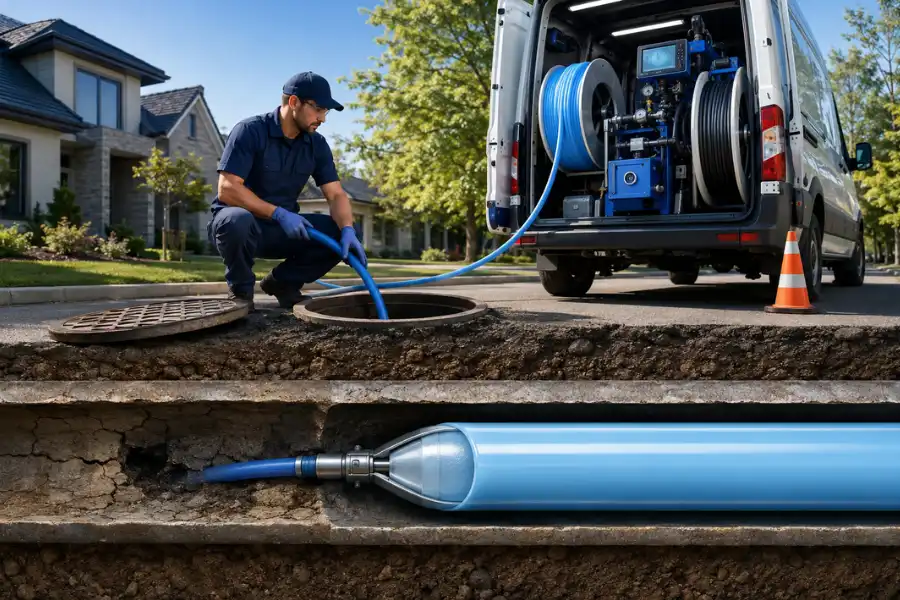
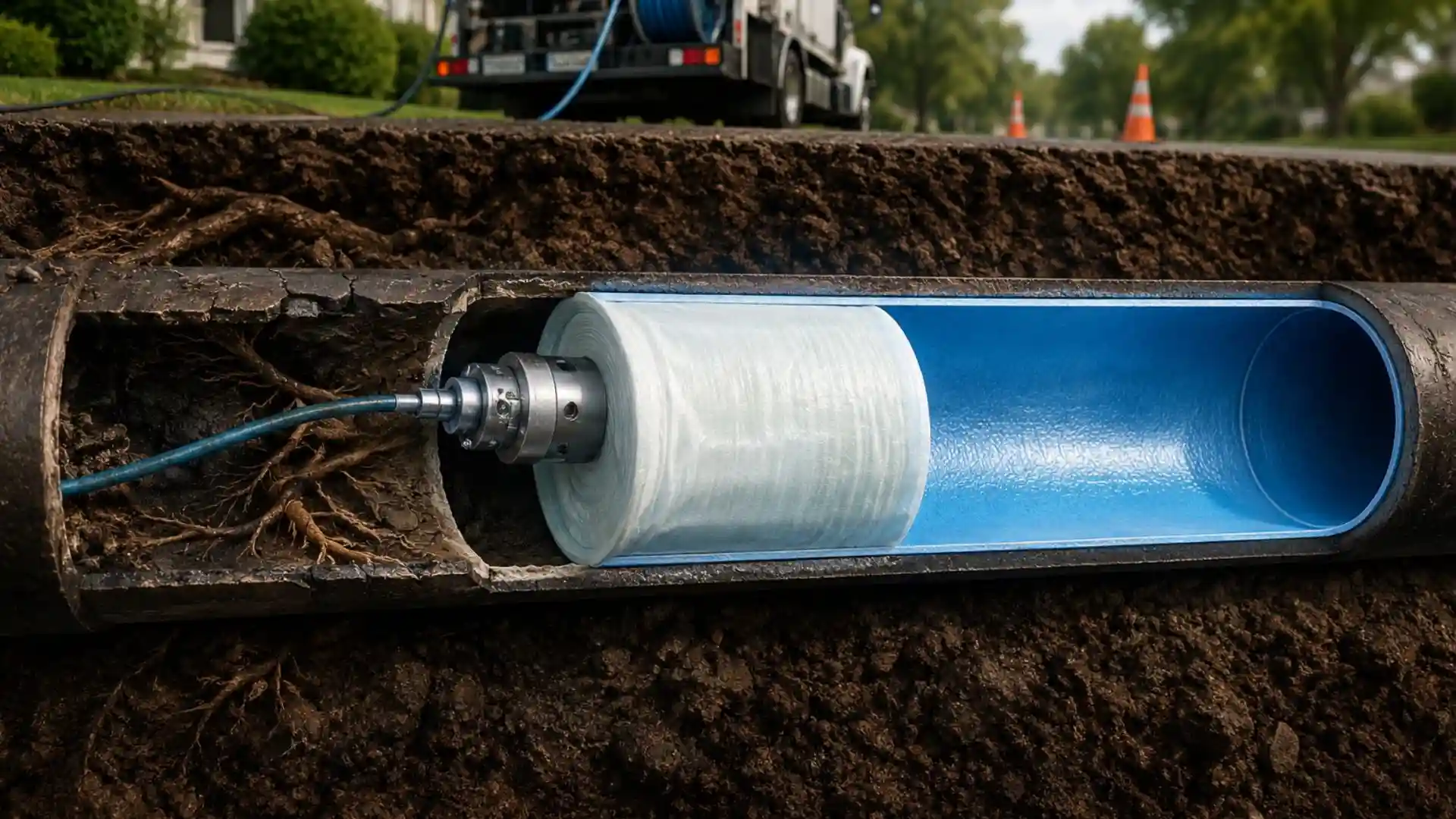
Also known as Cured-in-Place Pipe (CIPP) lining, this advanced sewer restoration technique uses a resin-coated liner to build a new pipe within the existing pipe. Instead of removing the old sewer line, technicians place this flexible liner inside the damaged section. The liner is then expanded against the pipe walls and solidified into a strong, permanent pipe that strengthens the existing structure.
Sewer pipe lining provides an effective restoration solution for broken, leaking, and worsening sewer lines. You can avoid major excavation while fixing a cracked, aging, or leaking sewer line. At the same time, you preserve lawns, driveways, pavement, and reduce the restoration work that often comes along with sewer replacement services.
If your sewer line is structurally sound, trenchless sewer pipe lining provides a long-lasting solution with minimal disruption. It is one of the most effective solutions to prolong the lifespan of an underground plumbing system without completely removing the existing pipeline.
Schedule Inspection
Need help determining whether CIPP lining is the right fit?
If you are frequently experiencing leaks, slow drains, recurring backups, or an aging sewer line that is structurally in good condition, then you can contact us for a thorough inspection to determine whether you need to consider trenchless pipe lining or not.
How it works
How CIPP Pipe Lining Works
CIPP pipe lining is a method intended to restore damaged sewer pipes by installing a structural liner inside the existing sewer pipe. In this method, the original pipe remains intact and serves as a support structure, while the hardened liner builds a strong new structural interior pipe that fits perfectly inside the existing pipe.
The process begins with a detailed inspection of the sewer line using a professional sewer video camera to evaluate the pipe condition and figure out whether the lining is suitable or not. Technicians check for cracks, corrosion, tree root intrusion, piping joint failures, and other flaws in the pipe causing sewer efficiency.
After the inspection is complete and the pipe has been approved for lining, the sewer line is carefully prepared for installation. Any buildup, debris, sludge, grease, and other obstructions must be eliminated so the liner can bond firmly against the existing pipe surface.
The liner is built from durable materials like felt or fiberglass and is coated with a thermally bonded resin. At the time of installation, the prepared resin-coated liner is placed into the sewer pipe and fixed along the damaged area. Then air or water pressure is used to stretch the liner firmly against the inner walls of the existing pipe. This process ensures that the liner precisely matches the original pipe shape and provides a solid fitting.
Once the installation is complete, the final stage is to cure and harden the flexible resin into a rigid, structural pipe. The curing method varies based on factors like pipe size, liner type, and project specifications.
Curing Methods
Steam, UV light, or ambient curing methods.
Once installed, the liner cures and hardens into a rigid, structural pipe inside the existing sewer line.
♨️
Steam Curing
Steam curing is the most commonly used CIPP curing method, in which heated steam circulates through the liner, activating the resin reaction and speeding up the hardening process to build a strong structural pipe.
This method is reliable and provides solid curing results; therefore, it works well for residential and commercial sewer lining applications.
💡
UV Light Curing
UV curing involves fiberglass liners made with light-sensitive resin. A specialized ultraviolet light source moves through the liner to harden it. The process heats up and activates the resin, curing it from the inside in a controlled process.
Technicians can monitor this curing process closely and in real time. Therefore, UV curing guarantees excellent quality assurance and is usually used for projects where precision and installation control are critical in sewer lining applications.
⏱️
Ambient Curing
In the ambient curing process, the resin hardens on its own over a period without the use of steam or UV light. Although this method takes a longer curing period, it can be suitable for certain projects where repair conditions allow for a slower completion process.
Once fully cured, the liner becomes a smooth, seamless, and corrosion-resistant interior pipe inside the existing sewer line, resulting in restoration of structural integrity, better sewage flow, and reduced leakages in the future.
Right Fit vs. Not Suitable
When trenchless pipe lining works — and when pipe bursting may be better.
A professional video camera inspection helps identify whether your sewer pipe is a potential contender for trenchless pipe lining.
When Pipe Lining Is the Right Fit
Sewer pipe lining is the most effective solution when the existing sewer pipe can still maintain its basic structural form, even though its condition is deteriorating. In this condition, you may not require a complete replacement but just a repair. When the installation is carried out, the old pipe must serve as the base for the new liner. It must be sufficiently strong to withstand the assembling process. In the majority of cases, sewer pipe lining can restore the pipe with minimal excavation
A professional video camera inspection helps identify the concerning areas and confirm whether your sewer pipe is a potential contender for trenchless pipe lining.
Pipe lining is recommended for sewer pipes in the following situations:
- Cracks and fractures in the sewer pipes
- Leaking points and joints
- Minor pipe separations or gaps
- Deteriorating clay pipes
- Small structural defects
- Root intrusion after removal
- Damage due to corrosion in older pipes
- Aging cast-iron sewer lines
- Small areas of structural damage
- Groundwater penetration.
CIPP lining helps restore damaged sewer pipes and creates a smooth inner surface that reduces future leak points. The finished liner has minimal joints, so there is a reduced scope of future root intrusion.
When Pipe Lining May Not Be Suitable
Although trenchless lining is a remarkably effective sewer pipe restoration method, it is not the right solution for every type of sewer failure.
Pipe lining is not suitable when the existing pipe has:
- Completely collapsed
- Severe structural damage
- Large missing sections
- Major pipe separation
- Significant alignment problems
- Extensive structural failure
- Severe deformation
In the above situations, pipe bursting is the better trenchless option when the situation is beyond minor repairs. While pipe lining repairs the existing damaged pipes from the inside, pipe bursting replaces the entire damaged sewer line. In the pipe-bursting method, old pipes are broken, and new ones are pulled into the same positions.
It is important to understand the difference between these two methods. Pipe lining is intended for repairs of old pipes when the old structure is still intact. It prevents large-scale damage in the future. Pipe bursting is recommended when the existing structure is no longer in working condition, and it requires complete replacement of the existing pipes. Consult a professional for a sewer camera inspection to determine which trenchless solution is the best fit for your property and can give long-term results.
Benefits
Benefits of Trenchless Pipe Lining

Minimal Excavation and Property Protection
The biggest benefit of CIPP trenchless lining technology is that when the process is undertaken, it does not require large trenches across your property. Whereas, traditional sewer replacement requires extensive excavation (including removing landscaping, pavements, driveways, lawns, or other surfaces) above the sewer line. With the trenchless method, technicians usually enter the sewer line through small access pits, helping protect the appearance of your property. This helps protect:
- Lawns and gardens
- Trees and landscaping
- Driveways and sidewalks
- Patios and outdoor spaces
Creates Seamless, Jointless Repair
Traditional sewer pipes often collapse at joints between pipe sections. These joints allow gaps to form between pipes over time, later allowing access to roots and groundwater, affecting the overall structure. CIPP is an excellent solution compared to traditional pipe sections connected by joints. It builds a continuous liner with a smooth interior pipe wall. This reduces leaking problems and improves overall pipe durability, while traditional solutions are not recommended due to a lack of longer lifespan. The trenchless pipe lining helps:
- Seal cracks and leaks seamlessly
- Reduce root intrusion risks
- Restrict groundwater intrusion
- Increase long-term reliability
- Extend the longevity of existing pipes
Long Service Life
If installed correctly, CIPP liners can provide decades of service in normal operating conditions. In many cases, it indicates that high-quality liners can even last for 50 years or more. The longevity of a sewer line depends on the materials used in building it, installation standards, the condition of pipes, soil conditions, and regular maintenance.
Faster Completion
Trenchless lining projects are often completed faster compared to conventional sewer replacement because trenchless pipe lining requires much less excavation. Less digging or excavation means less cleaning and restoration time for the project area after the repair is complete. It also means fewer restoration costs and less disruption to routine work.
Step by step
The Process Step by Step
The process is organized into inspection, cleaning, installation, curing, and final verification.
01
Camera Inspection
02
Cleaning and Preparation
03
Liner Installation
The resin-coated liner is placed inside the existing sewer pipe and fixed along the path of the damaged area. Once correctly positioned, water pressure is used to stretch the liner against the existing pipe walls.
04
Curing
05
Final Inspection
Cost Factors
The cost of sewer pipe lining may vary based on several factors specific to each particular project.
Pipe Diameter
Pipes with a larger diameter may need more liner material and resin, which can impact the overall project cost.
Pipe Length
Similarly, if the sewer lines are longer, they may require more materials, more preparation time, and more assembling time, further increasing the overall cost.
Access Difficulty
The project location, accessibility, complexity, or difficulty accessing the installation conditions of the sewer layout may require additional equipment and labor, which can affect project pricing.
Existing Pipe Condition
Pipes with heavy trash accumulation, root intrusion, or that require considerable preparation can affect pricing. Cleaning the pipe surface to prepare it for installation may require additional work before lining begins. A camera inspection can be a great initial step to determine the amount of work needed before installation.
The best way to estimate the cost of trenchless pipe lining near me is through a professional sewer inspection. A comprehensive inspection will enable technicians to advise on the right solution based on the existing condition of your sewer system.
Frequently Asked Questions
Pipe-Lining questions answered.
Use these expandable answers to help visitors quickly understand safety, results, tree roots, and emergency support.
What is trenchless pipe lining?
How long does trenchless pipe lining last?
Is pipe lining better and cheaper than sewer replacement?
Pipe lining is the best solution when the existing sewer pipe is structurally sound but in the process of deterioration. Pipes that have collapsed severely require complete replacement using the pipe-bursting process.
Yes, pipe lining is cheaper compared to sewer replacement.
Can tree roots damage a lined sewer pipe?
Can CIPP lining repair root damage?
Can old sewer pipes be lined?
Does trenchless pipe lining reduce pipe size and affect flow?
How long does sewer pipe lining take?
When should I consider trenchless pipe lining?
Related Pages
Explore more trenchless solutions.
Pipe Lining
Pipe Bursting
Hydro Jetting
Less digging. Better direction.
Get Connected With a Trusted Trenchless Provider
TrenchlessUSA can help connect visitors with experienced providers for specialized no-dig pipe and sewer solutions.
Schedule Inspection
Need help determining whether CIPP lining is the right fit?
Schedule Inspection
If you are frequently experiencing leaks, slow drains, recurring backups, or an aging sewer line that is structurally in good condition, then you can contact us for a thorough inspection to determine whether you need to consider trenchless pipe lining or not.
Request a Free Quote
Tell us what you need and we’ll help point you toward the right provider for your project.
Sample static form for HTML design reference. Connect to a live form handler in WordPress/Elementor.